Shown here
- Current page gaps and known product facts.
- Buyer details grouped before writing.
- Title, summary, sections, FAQ, specs, and search phrases ready for review.
Product page improvement
A stronger grocery page should make the exact oat type, package size, ingredient, nutrition facts, storage, dietary flags, and allergen checks easy to understand.
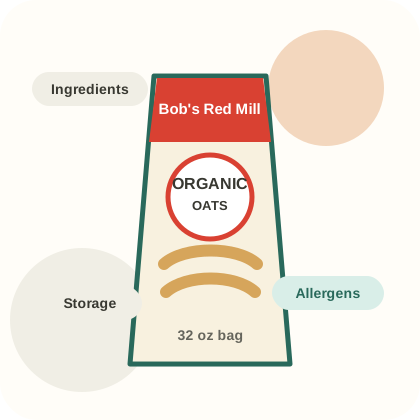
Use it to inspect how a thin record becomes clearer buyer-facing content. A live catalog still needs source approval before publishing.
Use this note to see which details are represented here, what still needs approval, and what the example does not claim.
Start with the available product information, fill the buyer gaps, then write the page.
Stage 1
The current page leaves important purchase questions unanswered.
Stage 2
Useful details are grouped before the customer-facing copy is written.
Stage 3
The improved page gives shoppers clearer answers and store teams cleaner fields.
Sparse product information becomes useful buyer guidance: what the product does, who it fits, what to check, and which details matter before purchase.
The weak record names the oats and size, but it does not separate package, ingredients, allergens, storage, dietary flags, or grocery category values buyers and catalog teams need.
The full buyer-facing page draft appears below.
Details are added for the exact oat variety, ingredient, nutrition facts, use cases, package fields, and claim gaps before the copy is written.
4 package identity details checked for the page, product file, and marketplace fields.
5 food details details checked for the page, product file, and marketplace fields.
5 buyer use and claim gaps details checked for the page, product file, and marketplace fields.
4 merchandising fields details checked for the page, product file, and marketplace fields.
The buyer details turn a thin item row into clearer shopper answers, cleaner attributes, and product-page sections that are easier to use across stores and marketplaces.
| Field group | Current gap | Buyer detail added | Why it matters |
|---|---|---|---|
| Package identity | Bob's oats | Brand, manufacturer, product type, and 32 oz package separated | A clearer product title and package-level product file |
| Ingredients | organic | Organic is flagged as unverified for this record; ingredient is whole grain oats | Ingredient and nutrition details stay visible before publishing |
| Allergens and storage | Not listed | Allergen statement is marked as package-required; shelf-stable grocery context is separated | Important food details and blocked claims are visible instead of hidden in a short note |
| Grocery filters | rolled oats | Product type, package size, unit count, category, nutrition fields, and Google product category separated | Cleaner grocery filters, product files, and marketplace fields |
Your store page stays buyer-facing. Marketplace outputs are separate field packages for Amazon and Walmart, prepared for destination rules, validation checks, and merchant-controlled values.
Keep grocery package, ingredient, nutrition, allergen-check, image, and offer fields separated for validation.
Prepare food item fields, package size, ingredient facts, category values, images, and seller inputs.
Bob's Red Mill Old Fashioned Regular Rolled Oats are a pantry oat product for hot cereal, cookies, granola, and oatmeal bread. The improved record separates the exact oat variety, ingredient, nutrition facts, package-size requirement, category values, and allergen-check gap so the page can be checked before it goes live.
| Item Number | BRM-REGULAR-ROLLED-OATS |
|---|---|
| Unit | Retail bag |
Food and grocery product pages need clean facts more than clever copy. Shoppers want to know what variety they are buying, what the ingredient is, how much is in the package, and whether nutrition or allergen details are complete enough to trust.
For Bob's Red Mill Old Fashioned Regular Rolled Oats, the improved record corrects the starting row by separating regular rolled oats from organic or gluten-free variants. It keeps whole grain oats, serving-size facts, nutrition highlights, use cases, package-size requirements, and allergen checks in clear fields.
Food pages carry ingredients, allergens, nutrition, storage, and package details. Those details should match the current package or approved manufacturer source before publishing.
Yes. Package size, oat type, ingredient, nutrition, brand, manufacturer, category, and Google product category values can be cleaned up for filters and product files.
Nutrition and allergen details should be checked against the current package or approved source before publishing.
Storage details help shoppers and catalog teams understand handling expectations and keep product pages, files, and marketplace fields consistent.
| Brand | Bob's Red Mill |
|---|---|
| Manufacturer | Bob's Red Mill Natural Foods |
| Product Type | Old fashioned regular rolled oats |
| Package | Package size required before publishing |
| Ingredient | Whole grain oats |
| Serving Size | 1/2 cup (49g) |
| Calories | 190 per serving |
| Dietary Fiber | 4g per serving |
| Protein | 6g per serving |
| Allergen Check | Check current package statement before publishing |
| Blocked Claim | Do not use organic unless the current package or approved source confirms the organic SKU |
| Category | Grocery; breakfast foods; oats |
| Content Check | Check current package size, nutrition panel, allergen statement, and image usage before publishing |
Compare this draft with the example library, the product overview, or the demo path.
Create a workspace to run the product-page workflow yourself, or request a demo if you want guided evaluation first.